Should You Ship Products with Poly Bags? 

Sending items in the mail can be stressful. Packages get tossed, rained on, or jostled around. Poly bags are an easy way to keep items safe and neat during shipping. 

Before shipping, pick a bag that fits your item snugly. Too big, and the contents can shift and get damaged. Too small, and the item might bend or tear the bag. Think of it like a phone or accessory wrapped snugly in a poly bag, protected and secure. The right size makes shipping worry-free.

Thicker poly bags protect against tearing, moisture, and rough handling. Thin bags are lightweight but may not survive the journey. Picture a thick, sturdy bag keeping a soft toy or clothing safe while traveling across the country. Durability is key to avoiding damage.

Many poly bags come with self-adhesive strips, zip locks, or heat seals. Imagine sealing a bag so tightly that dust, dirt, or water cannot enter. Proper sealing ensures your product arrives in the same condition it left your hands.

For fragile items, consider wrapping them in bubble wrap or placing them in smaller poly bags before sealing the main bag. Picture a delicate piece of jewelry or a small gadget cushioned and secure, ready for shipping without damage. Extra protection adds peace of mind.

Always label the bag with a shipping address, order number, or instructions. Imagine your package handled by multiple people—clear labels ensure it reaches the right person quickly. Labeling also helps if the bag will be opened by the recipient before placing it in another package.

Recyclable or biodegradable poly bags are available. Picture shipping products in bags that protect your items and the planet. Customers appreciate sustainable packaging, and it shows your brand cares about the environment.

Even in shipping, small details make a difference. Include a thank-you note, sticker, or a branded card inside the poly bag. Imagine the recipient opening the bag and feeling valued—not just receiving a product. Personal touches create memorable unboxing experiences.

Poly bags aren’t just simple plastics—they’re practical, protective, and versatile. By choosing the right size and thickness, sealing properly, protecting items inside, labeling, and adding small personal touches, your shipped items arrive safe and looking professional. Picture a smooth, stress-free shipping process where every package is secure and ready to impress. Poly bags make it possible.

Ever ripped open a box too soon?

You know that sinking feeling. You’ve waited days for a package—maybe it’s a gift for someone special, or maybe it’s just something you’ve been excited to finally own. The delivery truck pulls up, and your heart does a little jump. But then, when you bring the box inside, something’s off. The corners are crushed. The tape is peeling. One side is dented in. You try to tell yourself it’ll be fine, but as soon as you slice it open, you see the damage. The product you’ve been waiting for has been chipped, cracked, or scuffed.
That moment of frustration doesn’t come from the shipping company alone. More often than not, it comes down to one overlooked detail: the packaging supplies.
Think of packaging supplies as body armor for whatever you send. A weak box is like putting your valuables in a paper bag on a rainy day—it’s not going to end well. Cheap tape? That’s like locking your front door with a piece of string. Thin bubble wrap? Might as well whisper “good luck” to your fragile items. On the flip side, the right supplies turn shipping into an invisible promise. You open the box and your item is there, snug, safe, and untouched, like it never left the shelf.


So how do you make sure your shipments land safely every time?


Step one: Match the box to the item. Not every box is created equal. A heavy set of books shouldn’t be packed in a single-wall carton that can bow and break. Those need sturdy, double-wall boxes that can take the weight. A t-shirt or scarf, however, doesn’t need heavy armor. Choosing the right box saves money and protects what’s inside.

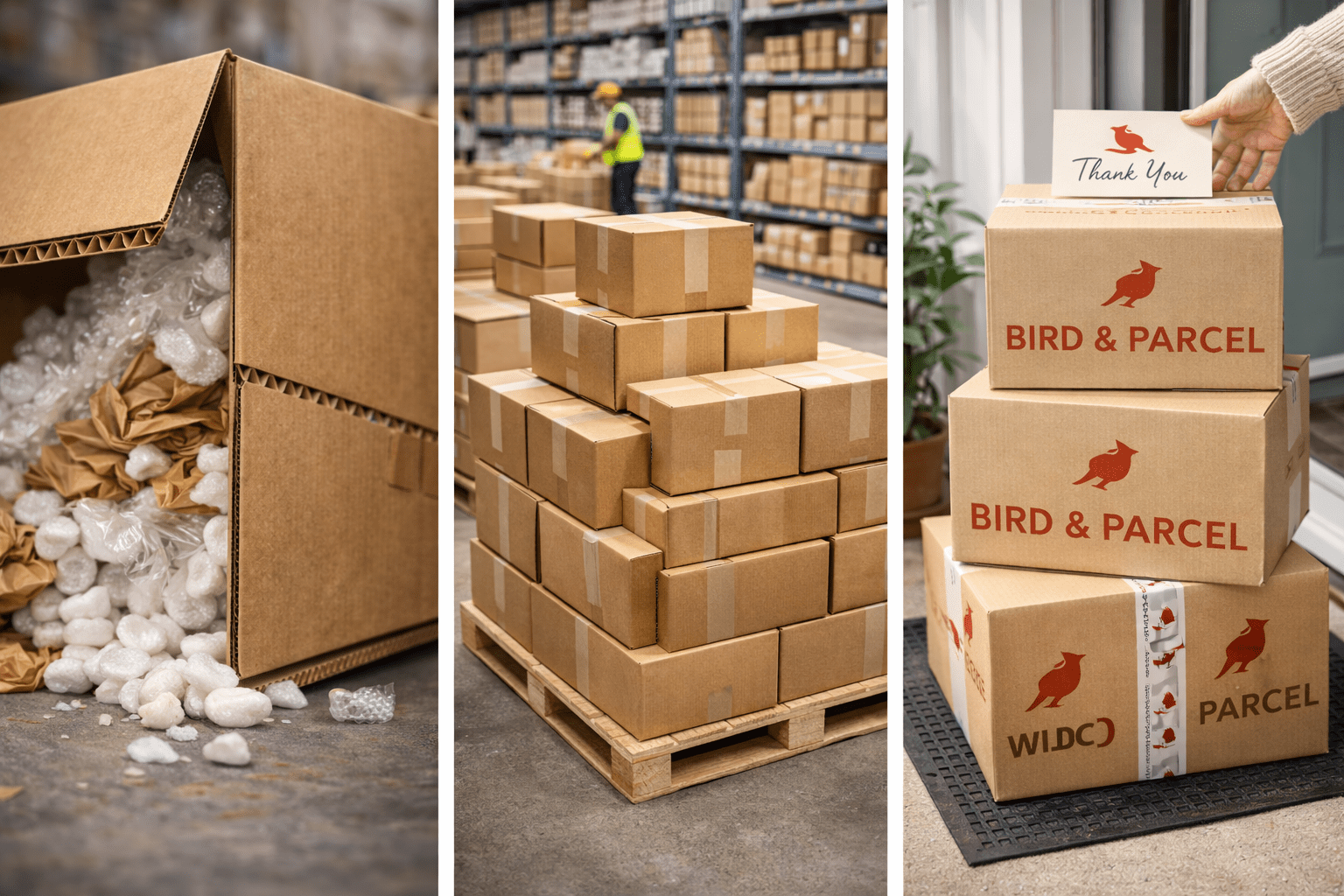
Step two: Think about layers. Fragile items should never be left rattling around. Cushion them with bubble wrap, kraft paper, or foam peanuts. Pack them like you’d tuck a child into bed—snug, comfortable, and secure. Layers absorb shock, spread pressure, and keep movement to a minimum.

Step three: Seal it with strength. The tape is the unsung hero of packaging. Strong tape doesn’t just hold a box together—it tells your customer you care. No one feels valued opening a box sealed with brittle tape that’s half off before it arrives. Invest in tape that sticks firmly and cleanly.

And here’s something that’s often overlooked: packaging is also presentation. Picture yourself opening a delivery. The box is clean and tight, the tape is neatly sealed, and the product rests safely inside, perhaps wrapped in protective paper. That moment feels intentional, almost like opening a gift. You don’t just see an item—you feel cared for. And that memory stays with you longer than you realize.
Customers don’t consciously say, “Wow, great bubble wrap.” But they do feel the difference between a sloppy, damaged delivery and one that arrives in perfect condition. That feeling builds trust. It makes them more likely to order again. It makes them recommend your business to a friend.

In the end, good packaging supplies aren’t just about protection. They’re about perception. They send a silent message: “This matters. You matter.” And when people feel that, they don’t just buy—they believe.

So the next time you’re tempted to cut corners with supplies, remember this: every package is a reflection of your brand. Every box is a handshake. Every roll of tape is a promise. Make those moments count, and your customers won’t just receive a product—they’ll receive your care.

Friction in Packaging Design: When This Matters 

Friction is something that some companies are looking at as a potential additive for their packaging means.

Friction is used in handling and transit, especially with stubborn packages. Many of them slide off pallets, and can be a struggle on hard-to-grab surfaces.   When this happens, many companies will look at ways to reduce these packages from falling off.

Here, we will go over the importance of packaging design and friction, and how, by incorporating this in your packaging, you’ll be able to prevent spills and messes. 

Different Tools for Friction 

Friction packaging involves certain tools that can help with safe handling, ensuring it’s possible.

One, is textured tapes. Many textured tapes are good for ensuring that your packaging doesn’t slip off. Since tape is used to seal packages, putting this on the side is a good thing to do.

Another one is anti-slip films. Slide these under the package, and from there, you’ll be able to reduce the slippage of some films.

Finally, grip-enhanced cartons. These cartons have extra grip in place, and you’ll be able to ensure that carries can hold this without any problems as well. 

How They’re Designed for Load Integrity and Stackability 

The main goal of these is to make them stackable. When stackable, they’re able to be balanced, and carriers can add another load without the items getting compromised. 

Another big thing is load integrity. With friction, your load integrity changes, and you’ll be able to improve the state of things.   You should look at the correct coefficients in shipping stability, and designing to ensure that it’s possible. 

Again, friction is powerful, and when you’re able to ensure the right packaging design is in place, it really stands out.

Improving Human touchpoint 

With stackability and load integrity a big part of this, you also need to look at how human touchpoints are. 

For instance, when they’re being taken off the pallet and put into delivery trucks, you don’t want it to slip, and then fall down and shatter. In that case, you want to improve such a human touchpoint by offering tabs that are easy to open. These types of tabs are very good for the carriers to reach in and hold.   While it might involve some design changes and may not work for everything, especially those which require a heavier grip, it does work.

Secure grips are something that also is a big part of this. With secure grips, you’re able to build and craft to improve the packaging. In doing such, you’ll be able to make sure that the items don’t drop.

Why this matters 

Accidents, spills, and slips can happen every single day. They can sometimes happen right away when getting out of the truck, or when you’re trying to figure out what truck it goes on. These small slips can be a big problem for a lot of companies.

Which is why friction in packaging improves the packaging experience, and makes it really stand out. In doing so, you’ll be able to bolster your packaging capabilities, experience, and really stand out.

By building such, you’ll start to see how friction within such a design plays a role, and also what it can do to help with improving your packaging overall.

The next time you put together packaging incentives that will help people and also get the shipping quicker and easier to customers, consider the anti-slip packaging, and adding more friction. It plays a focal role, and in turn, you’ll be able to build, not only from the packaging but from the act itself, stronger packaging overall too. 

Packaging for Prevention of Counterfeit 

Counterfeiting is a big problem in the packaging world. it not only initiates products, but the packaging too.

That’s right, yes the packaging.

This is a new type of duplication, but literal boxes, seals for this, and even holograms that are used to verify authenticity are being duplicated.   These counterfeiters get their hands on one, and then create a one for one copy of this item, sell it for the same price as the legit thing, and customers get duped by buying a fake.

Some have even duplicated the boxes completely. Dupe sunglasses, clothing, even those Lalanus are also being counterfeited, and some are looking strikingly close to the real thing.

So how can we prevent this? packaging is the answer, and we will look over how this type of packaging reduces the need for counterfeiters, and protects it too.

Built-In Security 

One big thing that a lot of packaging providers are implementing, is now built-in security features incorporated into the item.

This is seen with tamper-evident tape, which will show the customer if someone’s messed with it. It works great, and it can tell a customer right away if something is amiss.

UV elements are another one. Lots of UV elements are hard to duplicate, so companies are adding this, and customers can check under their own UV light for legitimacy.

Finally, QR codes, especially those which are serialized. If you can give it a serial number that can be authenticated, this is a common tool to deter these types of things.

Some have also started to use ledgers and the blockchain, but these can be manipulated, so if you do use them, ensure that there are authentications and security protocols in place to make this work. 

Authentication Via Packaging Technology 

A lot of packaging technology can be authenticated too, and you can actually scan this.

Adding a QR code or a bar code that you can scan with your phone to tell you the serial number and how authentic it is will be important.

Best of all, customers can double-check this as well, even before they open the package.

If they find that what they bought is fake, then they can make a complaint to a company, initiate a chargeback, and potentially get their money back, even before opening the box! 

The Supplies Designed to Prevent Replication 

A lot of boxes and packaging are also being designed to prevent replication of such items.

One example are die lines that are customized, made in a way where it is very hard to actually duplicate in its own way.

Another, is a foil treatment, where you use foil technology, in order to help create a system that’s hard to mimic.

Another, is hidden markers, which companies are putting in, and can direct customers to look for this. Again, this will stop a customer from actually getting duped, and will help ensure that the legit authentic products are all that they are buying.

With the rise of many high-end items becoming popularized and common, dupes will follow. It’s important to use authentication to prevent counterfeiting. 

It is also good for health sectors as well, because if you’re given an off-brand or a fake of some medication, this can cause major problems down the line. Packaging is now protecting this sort of thing, and offering you some amazing technological benefits that come with this. 

Prevention of counterfeit items is something that you will want to make sure you look at as a brand, and implement today to help prevent the spread of fakes, and ensure authenticity across the board. 

Packaging Supplies for Hazardous Materials 

Materials that are hazardous need to be packed accordingly. They’re dangerous in a container. Whether it’s toxic paint strippers or other chemicals, or maybe it’s just something that has some legal complications to it, you need to pack this accordingly.

By definition, the materials that are hazardous to shipping are those that are hazardous for legal reasons, or hazardous due to it being a risk factor. If anything you’re shipping falls into this, you need to take it upon yourself to ship it responsibly.

To do this, you need to use the right supplies for the job.

Dangerous Jobs, Danger-Proof Materials 

A lot of dangerous supplies can be shipped with the right danger-proof materials that are designed for compliance.

UN-certified boxes are one example of this. These are boxes that are certified for the protection of hazardous materials.

Leak-proof liners must be used for chemicals. That way, it doesn’t leak out of the box, and the liners catch any of the hazardous materials.

Absorbent pads are another. Many of these need to be corrosive-proof as well, offering you protection against corrosion to protect everything that’s there. 

All of these are designed to comply with the needs of the company, regulations, and various suppliers. All of this works together to generate great success.

Color-Coded and Regulatory Markings 

Many times, color-coded labels and regulatory marking sight offer some information on the shipping safety codes and other important information.t his can be used during international safety situations, offering you various codes to delineate items. Again, with these, whether it’s shipping internationally or just shipping throughout the country, you’re able to offer the proper regulations and safety codes.

Many of these will indicate if an item or chemical is corrosive, possibly flammable, or maybe even toxic if it gets on the skin.

Training Those to Handle Dangerous Packaging 

A lot of dangerous packaging needs to be handled carefully and accordingly.

Education of staff that’s putting everything in there, and workers that are looking to protect themselves and the goods, is imperative. You need to mitigate the liability of such times and accidents.

Having proper training on the packaging of these goods, explaining the risks, and even ensuring that compliance happens, is imperative for this. Overall, packaging for hazardous materials must be done with both staff and company compliance on all fronts.

If there are accidents, be mindful of the consequences, and provide staff with ways to streamline solutions so that it doesn’t happen again. you owe it to yourself to ensure that these packaging solutions offer some next level protection.

Industries that Need This The Most 

Anything that involves dangerous chemicals need this type of responsible packaging. Laboratories that are shipping out stuff that might be toxic are going to benefit from this.

The automotive sector is another.   Many things that go into cars are dangerous to ship on their own, and can result in problems. So, when you’re able to ship this, be mindful of such factors.

The energy sector is another. Natural gas, oils, and the like, are very dangerous to ship. Being mindful and practicing proper protection and guidance is important.

Overall, packaging sectors thrive on the compliance and regulations of this. if you’re shipping out anything dangerous, then get familiar with the current protocol for such packaging, and decide for yourself what you need to make such packaging easier for people to use, and safer too.t he safety translates across many areas, so being mindful is not only good for the here and now, but future trust in such a sector as well.