
If you’re going to buy a lot of candy boxes, and your candy has no wrapper (the candies “touch” the box), you need a candy box that is safe for food contact. A regular cardboard box is not always suitable for unwrapped foods.
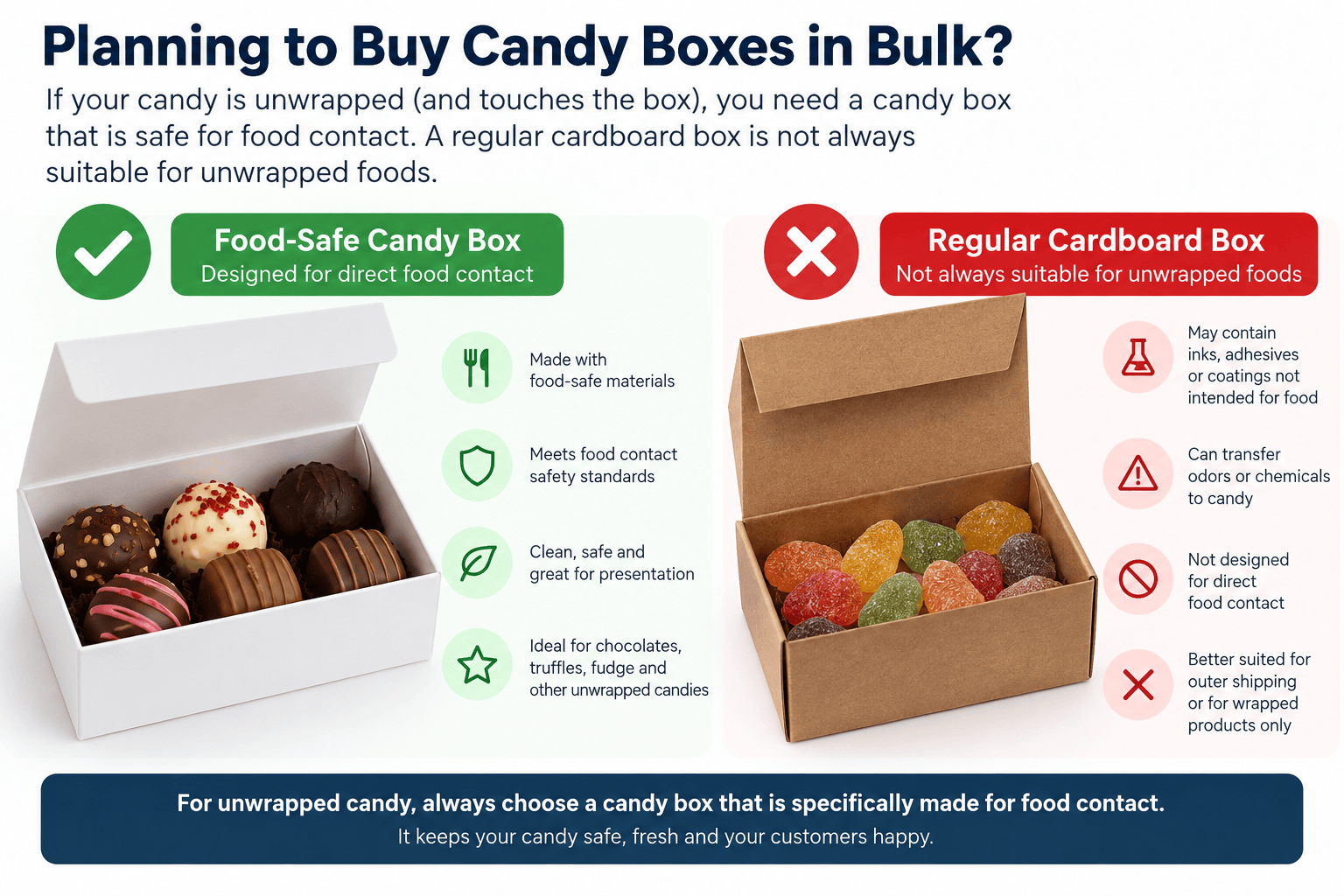
When buying from a retailer or online vendor, simply ask: Will the food come into contact with this box if I don’t use a liner? The seller should provide information that supports their response. Words such as “food-safe,” “direct food contact”, etc., support the answer. Simply stating the packaging is of “high-quality” does not necessarily mean the box is safe for direct food contact. The description may refer to appearance, durability, or how well the box retains its shape.
Wrapped candies have a layer of protection between the candy and the cardboard box. Bare candies do not. Candies that are greasy, caramel based, chocolate-based, etc., will release oils or moisture onto plain paper. Paper or foil cups, waxes, approved liners, etc., can serve as an intermediary layer to protect both the candy and the cardboard.
Another important factor many consumers overlook is odor. Strong ink, adhesive or chemical odors can migrate to the candy and affect its taste. Before ordering a large quantity of candy boxes open a sample candy container and store it in a normal area. Allow the aroma to dissipate over time. If the scent remains strong, request additional documentation prior to purchasing/using any containers for food storage.
Prior to filling with candy, the container itself also needs to remain clean. Unused candy boxes should be stored away from dust, water, insects, cleaning products, strong-smelling chemicals. Covering and storing on shelves or counters rather than floors helps maintain cleanliness regardless of how clean the area appears to be. Prior to reuse or resale check used candy boxes for stains, dampness, creases/bends, pest damage.
While allowing customers to visually inspect the contents through a transparent portion of the packaging provides convenience, it creates one more component requiring evaluation. Be certain the plastic film is rated for food-contact applications and securely attached. Poorly secured adhesives, sharp edges on the film or a hazy plastic panel can detract from an otherwise acceptable product presentation and cause suspicion of poor handling practices. Clear windows can be beneficial when properly constructed.
In addition to aesthetics size affects the ability to safely pack and transport candy. Packing candy too tightly or having candies fall free within the box can cause unnecessary stress on the packaging materials. Dividers/trays can assist in separating flavors and aid in identifying which type(s) of candy exist within the box. Allergen labeling requirements apply to candy packaging similar to other packaged foods.
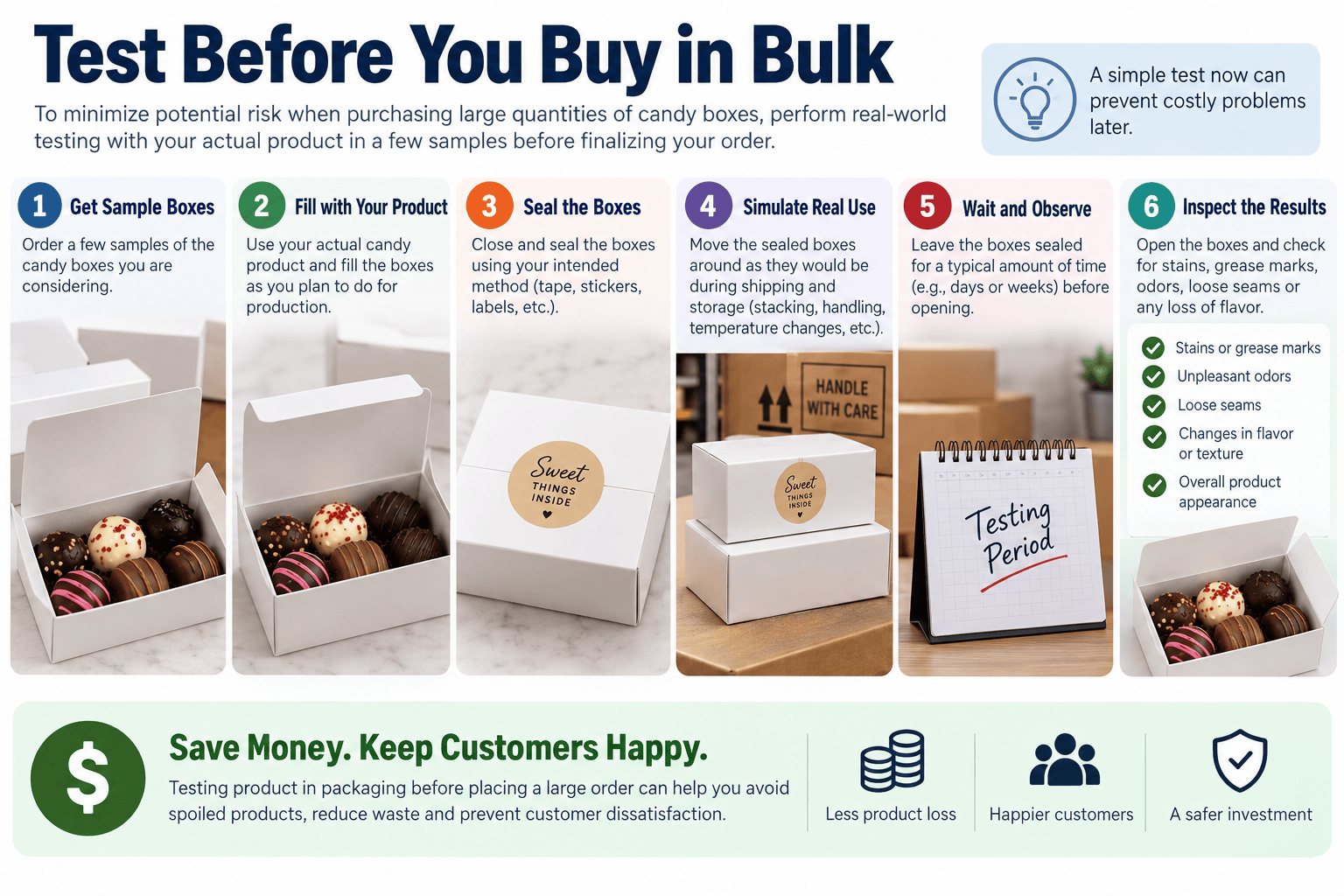
To minimize potential risk associated with purchasing large quantities of candy boxes perform testing using actual product in a few samples prior to finalizing orders. Once tested fill them with product and seal. Move them around as would during shipping/storage. Leave sealed for typical amount of time prior to opening and inspecting for stains/grease marks/odors/loose seams/loss of flavor. Testing product in packages prior to purchase can save money lost due to spoiled products as well as customer dissatisfaction.