
You are shipping the same item by two employees, and the products have been packaged differently. An employee uses inadequate wrapping; another employee chooses a large box and adds additional paper. Using a standard way to package items will help your employees conserve packaging supplies. And allow your customers to receive their shipments via a consistent delivery method.

Choose a product that is shipped frequently. Lay the product on a work surface along with all of the necessary packaging supplies. Select a box that is the right size for the wrapped product and strong enough to hold the entire weight. Determine if the pad is sufficient for the weight, shape, and surfaces of the product.
Pack a test shipment from beginning to end. Observe each step of the process that requires decision-making. For example, do employees need to know how to lay the product in the box? Do certain parts need to be placed into individual bags? Is there a specific location within the box to put dividers? Document these decisions in writing while this information is still fresh in your mind.
Identify all packaging supplies that were specifically used for the test shipment. Identify the box size (e.g., small), bag size (if applicable), type of tape, and type of pads. Only reference supplies that are labeled with their name on your inventory shelves. For example, referencing “a small box” could create confusion because multiple small boxes may appear identical.
Documenting pictures throughout the packing process. Take clear pictures of the empty box with the bottom padding installed. Take pictures of the wrapped product. Take pictures of how the wrapped product fills in the available space within the box. Take pictures after you close all flaps. This visual documentation will help an inexperienced employee understand details that may be difficult to communicate verbally.
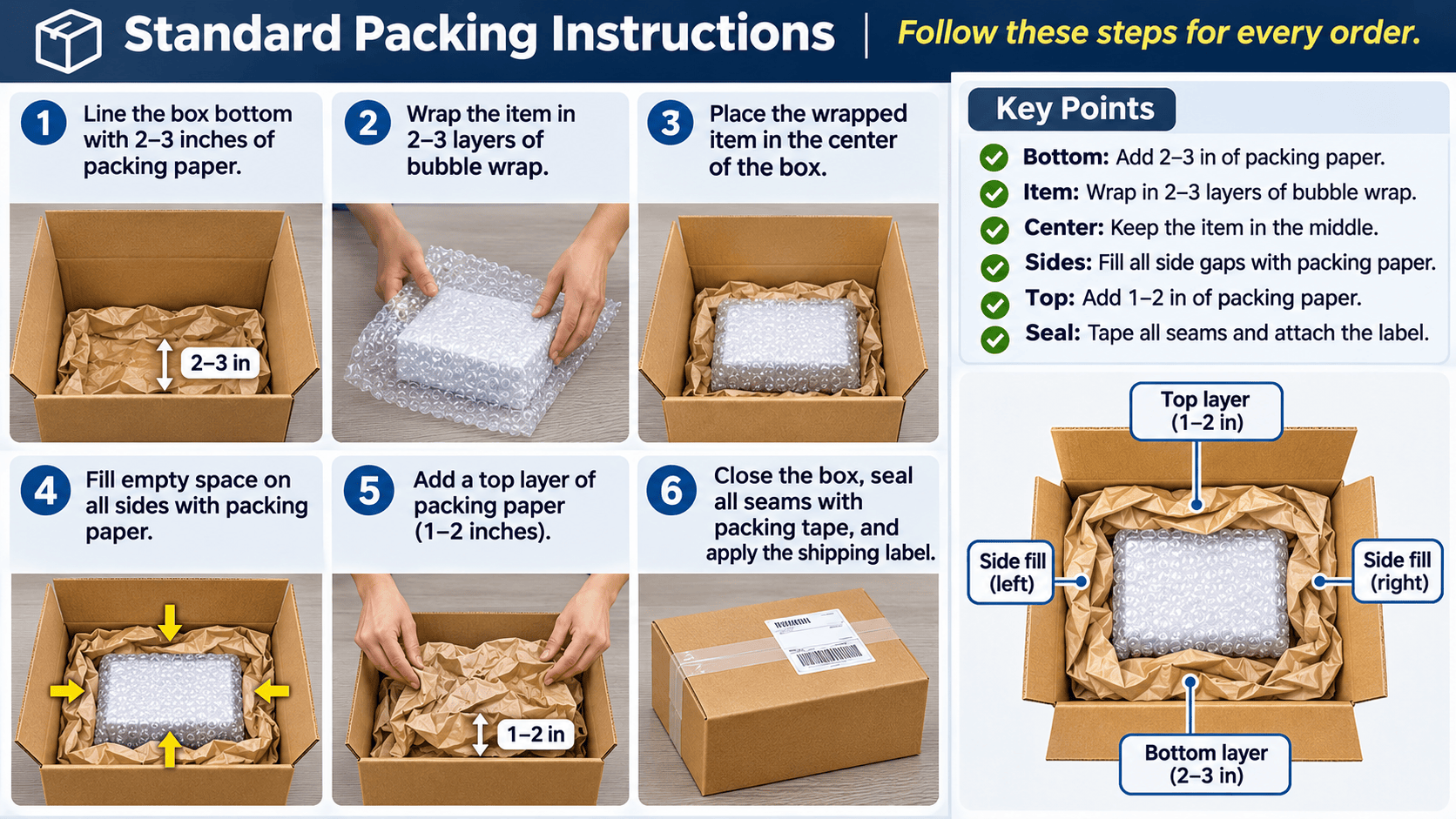
The instructional language should be concise. Each sentence should represent one task. It would be beneficial to avoid general statements such as “pack securely.” Instead describe where the wrap should go and identify areas of the box that need filling. This format makes it much easier to follow instructions during a fast-paced workday.
Include a checklist prior to sealing the box. Ensure that the employee checks to verify the contents of the box, verifies the number of parts included in the box, inspects all protective measures in place, confirms that the flaps seal evenly and are not forced closed, and does not detect movement when the box is gently lifted.
Have an associate review the document independently and ask for assistance only when necessary. Observe where your associate pauses or asks questions. The lack of clarity regarding a particular step may seem apparent to an experienced employee, however, may be confusing for a new employee. Make updates to the document until another employee can complete all tasks contained in the document with confidence.
Place a copy of the document at your packing station area so that employees can access it quickly and easily. Protect documents containing paper from liquid spills and replace documents when they begin to deteriorate. Date each document copy and include a description of each product in addition to any other descriptive data. This will enable your employees to determine which version of the document to utilize based upon product or material changes.
If any changes occur regarding either your product or packaging supplies (i.e., new handle, additional heavy parts, etc.), inspect your current packaging procedure and update it accordingly. In addition, review customer complaints regarding damaged shipments. Your goal is to provide guidance for your employees to select and properly utilize packaging supplies efficiently and consistently.