
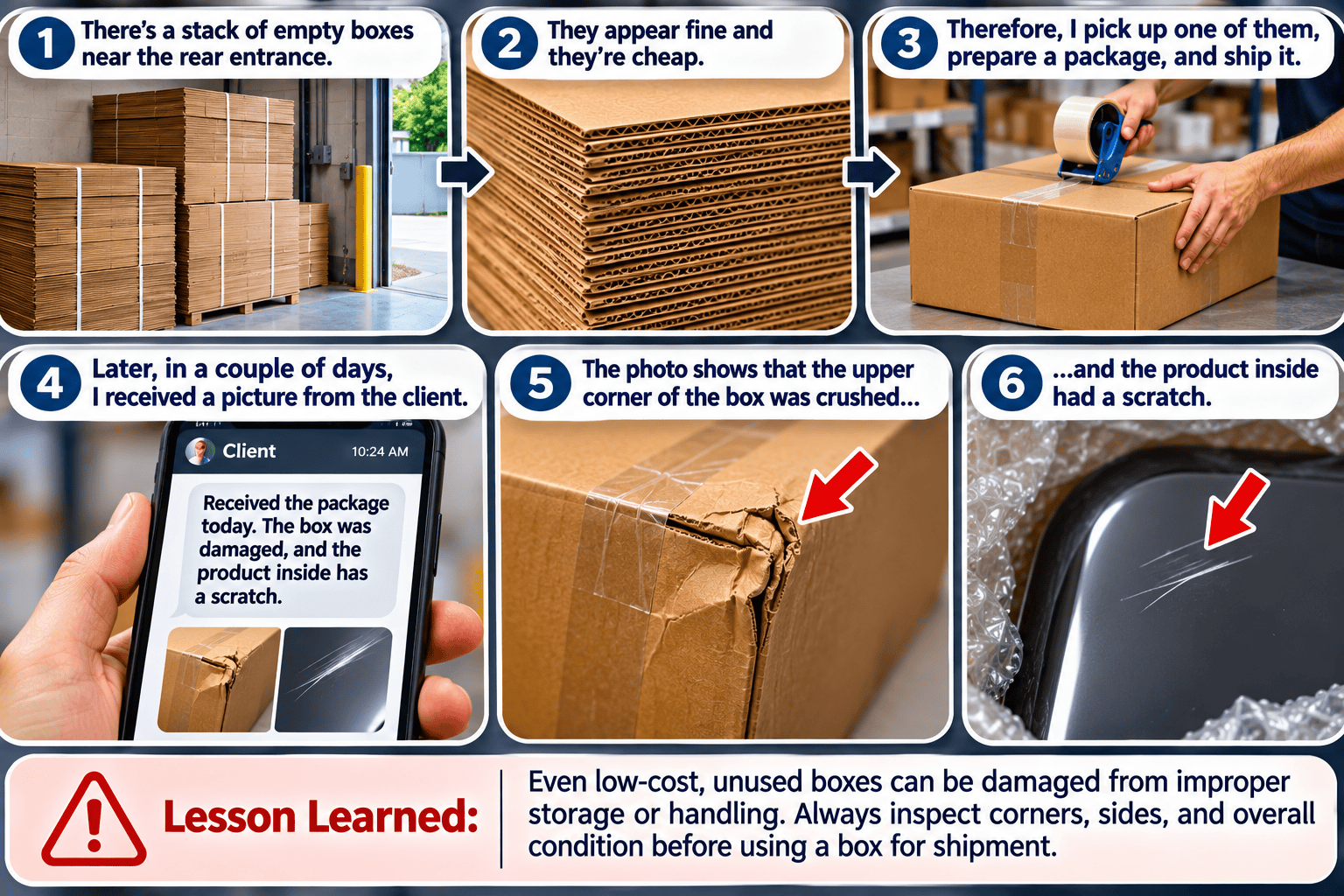
There’s a stack of empty boxes near the rear entrance. They appear fine and they’re cheap. Therefore, I pick up one of them, prepare a package, and ship it. Later in a couple of days, I received a picture from the client. It shows that the upper corner of the box was crushed and the product inside had a scratch.
You might easily assign blame to a bumpy ride but this box could have weakened itself prior to being sent out as part of your business. Old cartons can weaken themselves due to previous use, being stored under damp conditions, or having deep folds. A carton which successfully shipped an item previously will not necessarily be prepared to do so again.
Do you want to completely avoid using recycled cartons? No. An unused, sound carton may work well for a particular shipment. All you have to do is test it first. Take a close look at all four of its corners (to see if any are soft), bottom (for splits), and its flaps (see if they are torn). Any sign of cracks or dents can indicate areas where the structural integrity of the carton is beginning to break down.
Tape damage can also conceal weakness. Tear off all the loose pieces of tape. Examine the area underneath the tape for signs of delamination. If layers of paper separate when you tear off tape, then you may have weaker points in the carton where you plan to secure it.
Another consideration is size. If it fits the product(s) you are shipping within the same box, a large free box can add extra hassle. In addition to needing more packaging material, more shelving room and possibly additional postage for printing your shipping label you may need to purchase additional postage to print a larger shipping label depending upon which shipping carrier and type of service you use.
Lastly, you’ll likely lose some time getting it into shape. Your employees will need to scrape off any remnants of the old labels, remove any marks or stickers, inspect the seams for tears etc., and locate adequate fillers to prevent movement while in transit. Although it may be simple to do this once or twice per month across several months these little tasks can eat away at other valuable employee time such as packing items, responding to inquiries, or assisting other customers.
Using brand-new cardboard boxes provides a consistent start. Keeping just a few common sizes available means your employees won’t spend as much time searching for a good fit. Employees will get better at knowing how to properly pack items and perform similar actions repeatedly. This will allow them to quickly identify potential issues before your packages leave your facility.
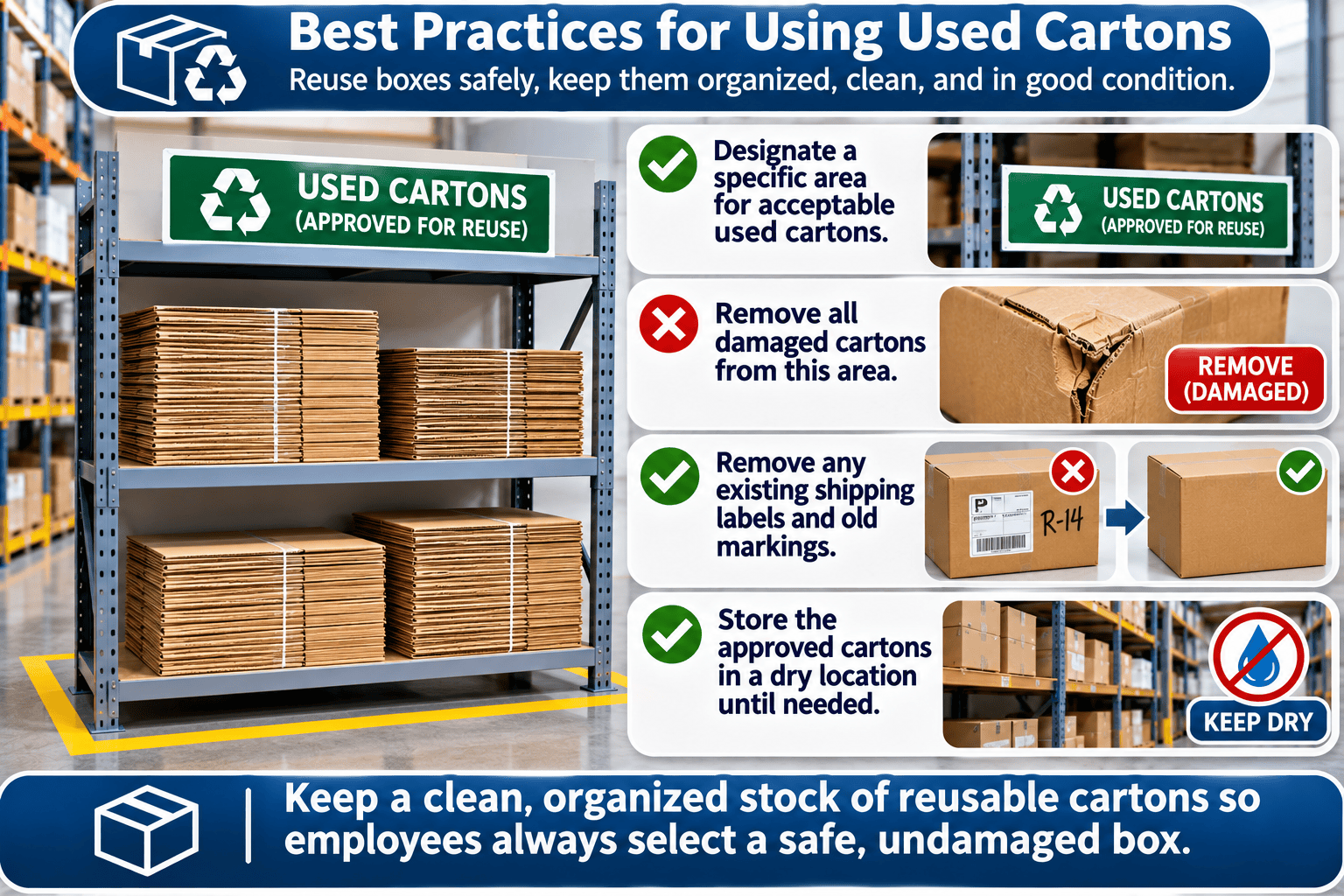
If you choose to use used cartons designate a specific area for acceptable ones. Also, remove all damaged cartons from this designated area so no employee accidentally selects a damaged carton during a chaotic moment. Remove any existing shipping labels and ensure there aren’t any pre-existing markings that could potentially cause confusion during subsequent shipments. Finally store them in a dry location until you need them.
While a totally free box isn’t always going to be cheaper than purchasing a box; replacing an item that is damaged enroute and/or reshipping an order along with dealing with an upset customer can ultimately end up costing significantly more than simply buying a new box. Be sure to scrutinize the cardboard boxes in the same manner that you would evaluate the merchandise contained in them.