
Heavy orders put pressure on all aspects of their packaging. Bottoms need to provide stability while being lifted; sides need to remain rigid throughout transportation. Using shipping containers that support the weight of an order is the first step to supporting these types of shipments throughout transport.
first determine the total weight of the complete shipment including product, any inner packaging materials (i.e., bags, inserts), cushioning supplies (e.g., bubble wrap) and/or additional materials included within the shipment. Once you know this number use it as the basis for selecting a shipping container. What works best for a light item may not have sufficient strength to carry a heavy load of tools, fasteners, metal parts etc.
Look at the manufacturer’s specification guide for the strength ratings and recommended applications for the shipping container. Even though Two shipping containers may be the same in terms of dimension, one may be significantly stronger than another. If there is any doubt about which shipping container would meet your needs based upon the weight of your products and/or shipping methods contact your supplier for assistance.
When choosing the correct shipping container ensure that there is sufficient clearance space surrounding the packaged product to allow for adequate protection during transit. Adequate space prevents large, heavy objects from gaining momentum due to shifting. Conversely, excessive space could also limit the amount of cushioning available for protecting the contents.
Measure the product with its wrapping/packaging intact prior to determining the interior dimensions of the shipping container.
Before inserting the product into the shipping container protect all exposed corners/edges of metal products from rubbing against the shipping container itself. Metal corners are notorious for wearing holes through corrugated cardboard when subjected to continuous friction. Use appropriately sized edge protectors, custom-made supports or internal packaging to dissipate the friction.
Ensure that all sharp corners/points of products are isolated from adjacent box surfaces.
Create a level foundation inside the shipping container. Packaging materials should be able to bear the weight of the product without deforming under extreme pressure. Loose fill materials such as foam peanuts, Styrofoam “peanuts”, etc., tend to displace or flatten rapidly when subjected to extreme compression from a heavy object. Distribute the weight of heavy objects over multiple areas of the bottom of the shipping container instead of allowing them to rest solely upon a single point.
Prevent heavy objects from impacting one another. Package individual components separately with stiff partitions/dividers or use internal shipping containers with separate compartments as necessary. Ensure that internal packaging provides adequate separation to maintain position and prevent damage among items. Additional loose filling at the top will not adequately compensate for voids/gaps between heavy components located closer to the bottom.
Close and seal the shipping container with tape suitable for both the type of carton used and weight loaded into the carton. Close both top and bottom center and edge seams securely. Apply tape only to clean/dry corrugated cardboard surfaces and apply firmly in motion. More tape does not make up for a poor quality or damaged shipping container.

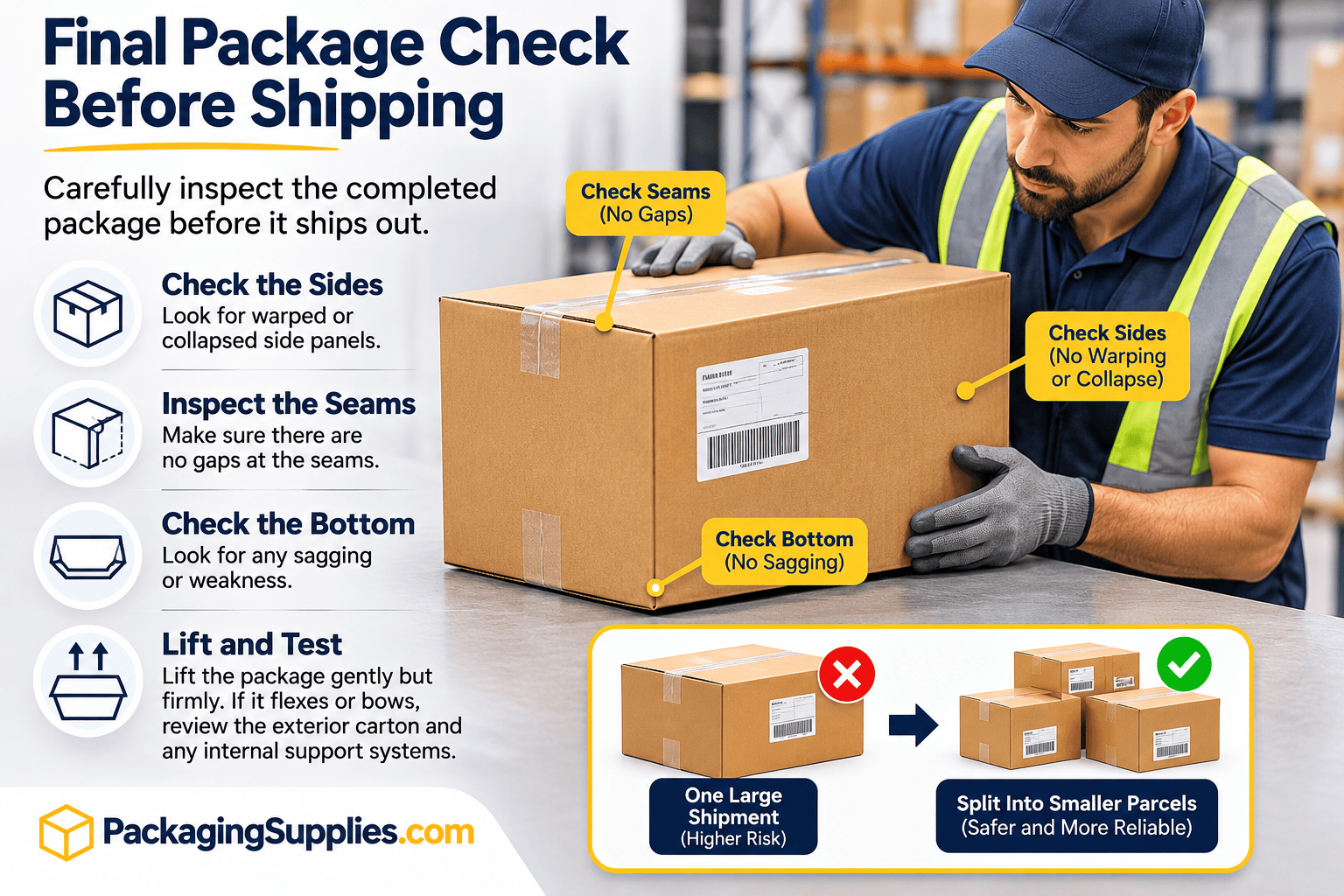
Carefully inspect the completed package before it ships out. Inspect for warped/collapsed side panels, gaps at seams or sagging bottoms. Lift the package gently but firmly. If it flexes/bows in any way review both the exterior carton as well as any internal support systems. Consider splitting larger shipments into smaller parcels.
Document your successful use of specific shipping containers and methods for future repeats. Document any reported damages and adjust your packaging accordingly. Sturdy shipping containers combined with proper internal support and secure seals minimize movement and stress placed on packages containing heavy goods.