
Have you ever stacked boxes in your warehouse, walked away, and come back to find one crushed in the middle? The top box is leaning. The sides are bowed. The bottom one looks tired and weak. It feels like the cardboard just gave up.
Boxes do not collapse for no reason.
Most of the time, the problem starts with strength rating. Not all cardboard boxes are built the same. Some are designed for light items like clothing. Others are built to carry books, tools, or bulk supplies. If the weight inside the box is too heavy for its rating, the walls begin to bend under pressure.
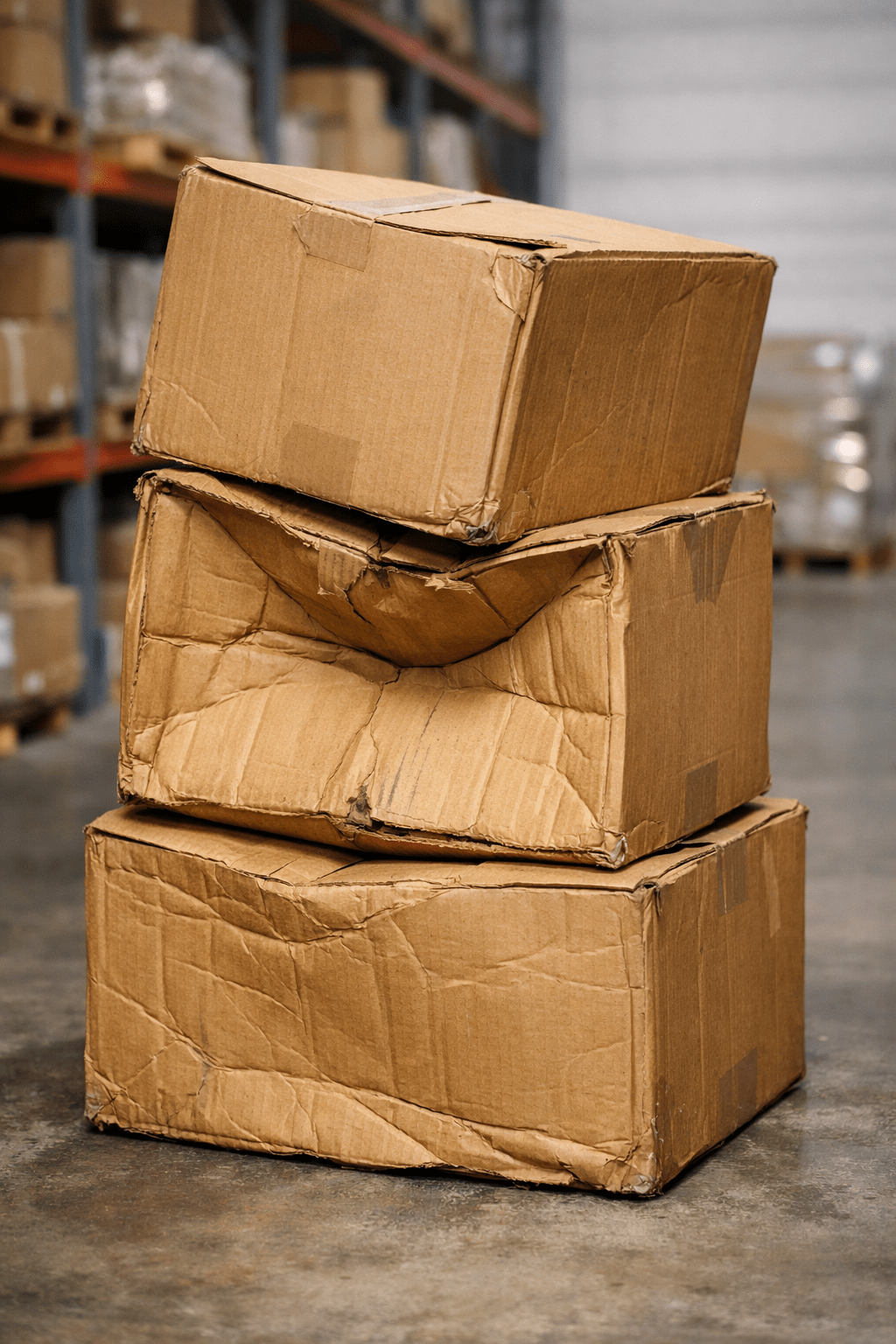
Think of a box like a small building. The sides act like walls holding up a roof. When you stack another box on top, that roof carries extra load. If the walls are thin, they bow inward. Once that happens, the shape weakens fast.
Now picture a warehouse shelf with boxes stacked three high. Each one is holding product. Each one is carrying weight from above. If even one box in the middle is too weak, the stack shifts. That shift can lead to damaged goods and wasted money.
The solution begins with understanding corrugated board. Most cardboard shipping boxes are made with fluted layers sandwiched between flat sheets. Those flutes are what give the box strength. Larger flutes create thicker walls. Thicker walls handle more pressure.
Single wall construction works well for lighter shipments. Double wall construction adds an extra layer of support and is better for heavier or fragile items. Choosing the right structure prevents sagging during storage and transit.
Weight is not the only factor. Distance matters too. A box traveling across the country faces more movement than one delivered locally. It will be lifted, sorted, stacked, and shifted many times. That repeated handling adds stress to corners and edges.
Moisture also plays a role. Cardboard absorbs humidity from the air. In damp conditions, it becomes softer. Soft walls lose strength. If boxes are stored in areas with high humidity, they may weaken before they are even used.
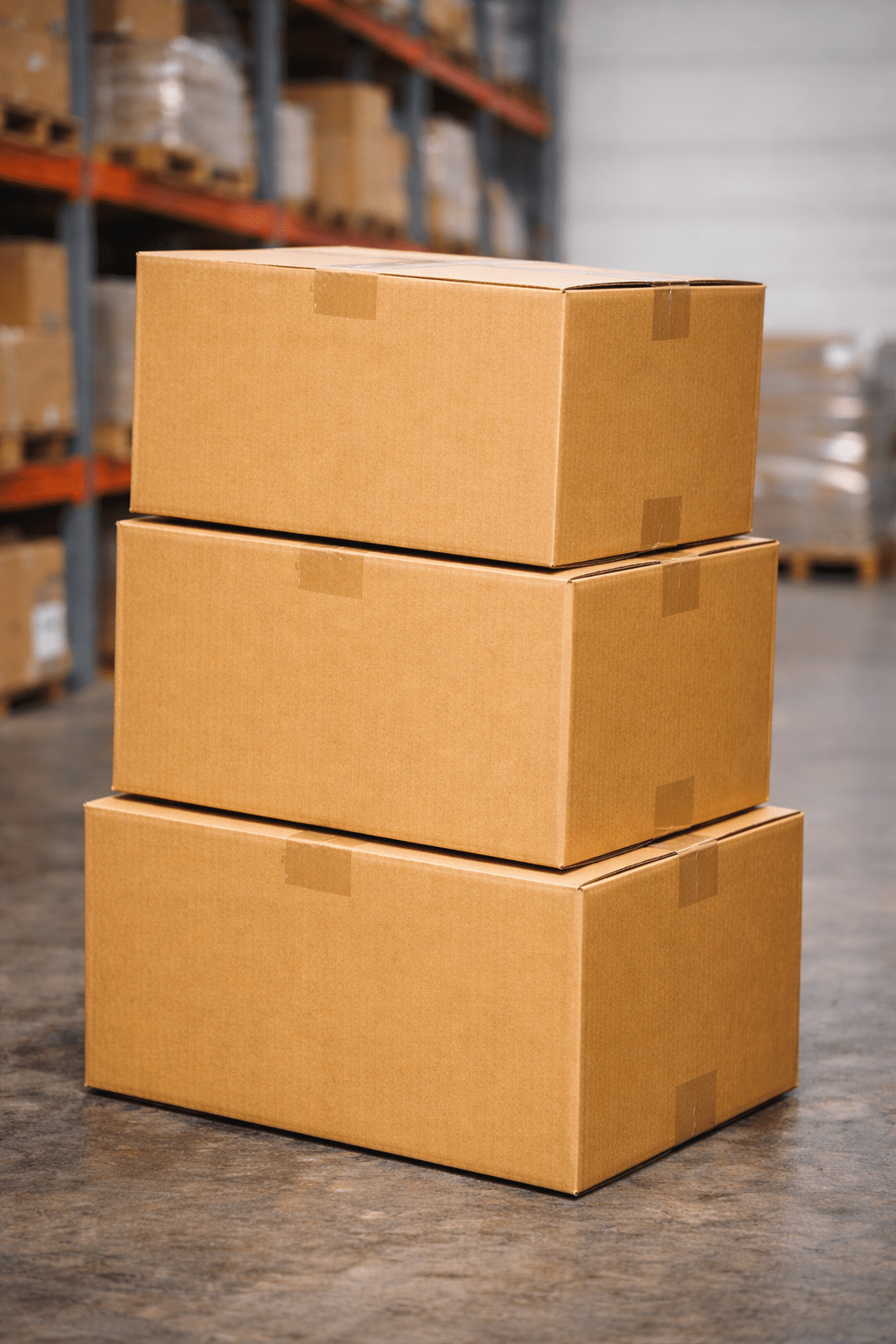
Now imagine the opposite scenario. You build a pallet of properly rated boxes. The sides stay straight. The corners stay sharp. The stack looks solid and balanced. When a customer receives their shipment, the carton holds its shape. It opens cleanly. The product inside is protected.
That stable appearance sends a message of care and reliability.
To choose correctly, start by asking how much your product weighs once packed. Add the weight of filler materials. Consider how high boxes will be stacked. Think about whether they will travel short or long distances.
Also pay attention to sizing. A box that is too large allows items to shift inside. That movement pushes outward on the walls. Proper sizing reduces internal pressure and improves overall strength.
Strong cardboard boxes do more than carry items. They protect inventory, prevent returns, and reduce complaints. A small upgrade in board strength can prevent large losses later.
When boxes collapse, it is rarely bad luck. It is usually a mismatch between weight and structure. Choosing the correct strength from the beginning keeps stacks stable and shipments secure from warehouse shelf to customer doorstep.